


2025-May-10 — All Past Posts
This is a userform that has been adapted from one of my pet projects called “Saral0506” wherein the form was used to feed the details of the Advance Taxes, Interest and Self-Assessment Taxes into the respective places in the control worksheet. Take a look at the userform itself before I explain the usage of the same.

Figure 1 : Userform to enter taxes
In the userform shown above, there is a provision for entering the data for the four due dates of Advance Taxes, namely on the 15th of September, 15th of December, 15th of March and on 31st of March of the financial year. So, you have the date tax was paid, the BSRCode & Challan No (trfVchNo) mentioned on the challan and the amount paid on that date. Based on that information, if the checkbox for calculating the interest has been checked, the interest under the three sections of 234A/234B/234C is calculated. Obviously two other inputs are required for this to be done accurately and those are the amount of tax that is due for the year and the tax deducted at source. There is another userform before this one that takes that input, and since we are not talking about that form yet, let us continue how this form operates, assuming that those two figures have been already provided in the Computation of Total Income Worksheet already discussed elsewhere. Then comes the upto four Self-Assessment Challans that can be fed into the system based on the Computation of Total Income that we have discussed elsewhere. Once you click the button called “Post It!”, the said information gets posted into the Computation of Total Income and that’s all there is to it, folks!!
Cheers!
CA Vikram Shankar Mathur
29/Apr/2022 | 20:50 Hours IST
Indeed, getting the Microsoft Calendar control on a userform has tended to become more and more of a difficult proposition, that has prompted me to create a userform that acts like a calendar and I have decided to call it “VSMCalendar”. Just take a look at the image below, then I will explain it’s operation to you.

Just by looking at the above userform, you will be struck with the familiar similarity of the look of the Microsoft Calendar Control (for those of you who have been used to the control, like me). I was inspired by a similar userform that came with basic coding, to which I added my own colors and coding to use it in my projects. So you must have a worksheet called VSMCalendar to which this control adds the date in two formats, one is the long date format of “DD MMMM YYYY” and the other is the standard date format of “dd/mm/yyyy”. You can change the date by using the combobox for the month and the year and by clicking on the day you want from the command buttons provided, then click on the “OK” button to set the date. The command button programming is largely courtesy the original developer of the userform, but the rest of it is my doing. This userform was also developed in the year 2014-2015, so it is also around eight years old. But it is so easy to operate that it is not funny!!
Cheers!
CA VIkram Shankar Mathur
27-Apr-2022 | 10:50 Hours IST
I got sick and tired of the failure of the Microsoft Calendar from being made a part of my VBA Projects that I created a new kind of Data Entry Form for a Date entry. You can call it anything you want, but I decided to call it “frmCalendarDate” or “MonthView Form”. It looks like this image below:

Basically, the operation of the above is very simple and obvious, and has been inspired by a similar post I saw elsewhere around 15 years ago, but basically requires you to manually feed the year, month and day using the up-down coltrols provided, or you can enter them manually and the data appears in “The Selected Date” textbox, after which you can click the “Date is OK” button and get the date in a designated cell named as “frmCalendarDate” on any worksheet of your choice anywhere in the workbook. That is all there is to it, folks!! Like it? Follow my blog if you do, I am putting up numerous posts and will continue in the near future to do so. Cheers !!
CA Vikram Shankar Mathur
24-Apr-2022 | 10:52 Hours IST


Three screens depicted above are actually one worksheet, starting with the first screen showing some statutory details of the assessee (in our case the same employee whose salary register gives the details that are required in the second screen). This computation basically would work for only the salary income portion, even though those of you with sharper eyes would detect that income from house property, business income, capital gains and income from other sources can also be fed into these sheets. However, then the Income Tax Return ITR1 would not apply, rather some other appropriate ITR would have to be prepared. We are not going into which ITR for which set of circumstances, suffice to say that this computation is versatile enough to serve any purpose. In the workbook that I ultimately set up in combination would technically allow no entry except in the fixed details section that is Part A.
Recall that the Salary Register has a space where some investments can be declared by the assessee/employee? Those details would automatically get added to the second screen that is the beginning of Part B of the computation. Finally the third screen does the actual computation of the income with inputs about Advance Tax, Self-Assessment tax and interest and other taxes, including Tax Deducted at Source details (other then the Section 192 details which come from the salary register itself). The final purpose being the estimation of the appropriate Tax Deducted at source under section 192 of the Income-Tax Act, for the balance period for which the payslips are yet to be prepared. Once the entire 12 months are entered, one would get an idea about the tax liability of the employee for that particular financial year.
Cheers !
CA Vikram Shankar Mathur
15-Apr-2022 | 06:26 Hours IST
On January 23rd, 2016 it was announced that the 48th batch of FAFP shall commence in the city of Ahmedabad, Gujarat and my joy knew no bounds, because I am not ashamed to say that I had set my heart on achieving this certification at any cost – mind you, by the only means that I would allow myself – fair means, that is.
Training sessions were announced to be held at the Hotel Regenta, Ashram Road and were to go on till February 22nd, 2016. All this was okay, except for my apprehension that the last examination I had ever appeared for had been in March’2006 for the Diploma in Information Systems Audit (DISA) also conducted by the Institute of Chartered Accountants of India (ICAI). Ten years later, I was pitting myself against 32 other, most of them much younger and perhaps more technologically advanced and certainly more capable than myself – and as I discovered later, a couple of them or more were even CISA qualified. Let me tell you, friends, these are not odds that work out in your favor under any circumstances. My initial and greatest fear, and I have no qualms of sharing this with you, was that if I was unsuccessful in achieving this landmark (for me, personally) certification, how silly I would look. To complicate matters further, I discovered to my horror that I was one of the senior-most in this particular batch of aspirants!!
Up till the time that the examination on the ultimate day of the training was announced, the quality of the training being imparted at the training sessions and the incisive technical knowledge possessed by the faculties who had been appointed to train us were beyond the ultimate limits that one could ever set for these eminent faculties. Most of them were, frankly, brilliant in their explanations and the way they communicated with the participants, for me, was another dimension itself. Fortunately for me, I had no problems whatsoever in understanding their teachings and was enlightened in many ways you cannot even imagine. To say that these training sessions stimulated me, is an understatement.
Though, at this point, I will honestly admit that I was no stranger to this field, having worked for almost a year with a reputed Insurance Surveyor in the city of Ahmedabad, way back in 2002, post the Godhra Riots and the burning down of God knows how many industrial and commercial establishments, resulting in perhaps crores of rupees of losses across the length and breadth of Ahmedabad and the state of Gujarat.
Again, since January 2015, when I had been added to a WhatsApp group being run by a highly reputed CA from Mumbai and then came into contact with perhaps a hundred or more other CA’s who were at different stages of being highly experienced and also coming from different states of our country, which was another eye-opener for my humble self. Their interactions were only being read by me on the social media like WhatsApp, Facebook and on LinkedIn since the one year prior to my joining this certification course, but my understanding and comprehension about the importance of this field for all CA’s had been growing by leaps and bounds, perhaps my other participants were not even aware of these developments that I had been following quite ardently.
To say that I was delighted to see the paper given to us on the ultimate day of the training completion, is an understatement. So greatly relieved and overjoyed was I on completing the paper literally 15 minutes before the scheduled time of completion, which gave me some time to review the entire paper at least once completely. Of course, it was too early for me to say conclusively that I had passed the examination, but yes, I was reasonably certain that I would not be unsuccessful in clearing it.
After completing the submission of the required research paper, the connected presentation and the two dummy forensic reports to the institute, I was reasonably sure that I would clear this asssessment, because by then I was quite certain that my understanding of the training sessions was as much as any other candidate in those sessions.
On 6th April, 2016 the email announcing that I had successfully completed the requirements necessary for the award of the certification came, I was informed by my colleague and good friend about it, since I had been busy with work that evening.
In celebration of this event, I have even created a Facebook Page to commemorate it here.
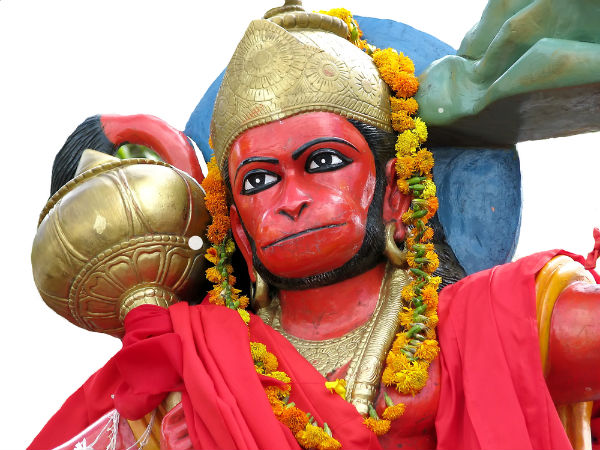
This is a compilation of various pieces of information that have been gathered and put in one place for the dissemination by the reader and by the author. (Done so that one does not have to repeat this exercise again and again, knowing that there are many devotees of Lord Hanuman world over.)
The first is 1o interesting facts about Lord Hanuman (Source: http://www.scoopwhoop.com/inothernews/lord-hanuman-interesting-facts/ ~ Extracted on February 28th, 2016 at 10:10 pm)
Worshipped by many who wish to gain courage and strength in their lives, Lord Hanumanis probably one of the most celebrated and revered figures in the Hindu Mythology. And although most of us know quite a bit about the deity’s life (thanks to all the TV shows), there are still many things that we don’t really know about our beloved Bajrangbali . Things like:

Source: Sony TV
Anjana, a beautiful Apsara in celestial palace court of Lord Brahma was cursed by a sage that, the moment she fell in love her face would transform to that of a monkey. Lord Brahma thought of helping her and she took birth on Earth. Later, Anjana fell in love with Kesari, the monkey king and they both married each other. Being an ardent devotee of Lord Shiva, she continued with her tapasya to please the God. Lord Shiva was impressed and she wished him to be her son so that she would be freed from the curse of the sage.
Few days later, King Dasrath was performing a yagna after which the sage gave him kheerto feed all his wives. A portion of Kaushlya, his eldest wife, was snatched by a kite who flew all the way where Anjana was meditating. Lord Vayu (aka Pawan – Wind) on the signal of Lord Shiva kept the khee r in Anjana’s hand. Thinking it as Lord Shiva’s prasadAnjana ate it and thus gave birth to his incarnation – Pawan Putra Hanuman , the son of the Lord of the Winds.

Lord Hanuman was greatly devoted to Lord Rama. A particular incident was when Sita putsindoor on her forehead, Hanuman asked her why. To this, she replied that since she is the wife and companion of Lord Rama, the sindoor was a sign of her unconditional love and respect. Hanuman then covered his entire body with sindoor to prove his love for Lord Rama. Lord Rama was really impressed by this and granted a boon that those who worshiped Lord Hanuman in the future with sindoor would see all their difficulties go away.

Source: Sony TV
In Sanskrit, ‘Hanu’ means ‘Jaw’ and ‘Man’ means ‘Disfigured’. No wonder, Hanuman’s jaw as a kid was disfigured by none other than Lord Indra who had used his vajra (thunderbolt) against Anjaneya, who took sun as a ripened mango and even went to trace it up in the sky. It was there in the sky that Lord Indra had used his vajra which threw Hanuman straight on the Earth, damaging his jaw forever.

Hanuman’s Son Makard hwaja was born to a mighty fish of the same name when Hanuman after burning the entire Lanka with his tail had dipped in the sea to cool off his body. It is said that his sweat was swallowed by the fish and thus Makardhwaja was conceived.

After Lord Ram became the King, once, when the court was adjourned, Narada – known for creating disharmony between Ram and Hanuman – asked Hanuman to greet all the sages except Vishwamitra, since he was a King once. Hanuman did so, but it did not affect Vishwamitra.
Narada went on and instigated Vishwamitra, which angered him so much that he went to Ram and asked him to punish Hanuman to death. Vishmamitra being his guru, Ram could not ignore his command and punished Hanuman to death by arrows. Next day in the field, the statement was to be executed, but all arrows failed to do any harm to Hanuman as he kept chanting Ram!
Since Ram had to abide by his Guru’s word, he decided to use the Brahmastra. To the surprise of all, Hanuman’s chants of Ram even failed the most powerful Brahmastra! Seeing this, Narada went to Vishwamitra and confessed his mistake, stopping the ordeal!

After the war at Lanka, Hanuman went to Himalaya for continuing his reverence of Lord Ram, Hanuman etched his version of Ram’s tale on the walls of the Himalayas with his nails.
When Maharshi Valmiki visited Hanuman to show his version of Ramayana, he saw the walls and felt sad as Valmiki believed that Hanuman’s Ramayana was superior and that his arduously created version of the Ramayana would remain unnoticed. Realising this, Hanuman discarded his version. Taken aback, Valmiki said he would love to be reborn to sing the glory of Hanuman!

Bhima was also the son of Vayu (the Lord of the Winds). One day, when Bhima was searching for a flower his wife wanted, he saw a monkey sleeping with his tail crossing the path. He asked him to move his tail. But the monkey didn’t do it and asked Bhima to move it. Bhima was very arrogant with his strength. Nevertheless, he couldn’t move or lift the tail. Therefore, he realized that this was not a mere ordinary monkey. It was none other than Hanuman. He lied there just to reduce the arrogance of Bhima.

When Lord Rama decided to leave his earthly existence for his journey to Vaikuntha (heavenly abode of Lord Vishnu), he knew that Hanuman would not let him do so as he was a great devotee. So he instructed Hanuman to find his ring which had fallen on the ground and then disappeared in the Patal Loka. Hanuman went on the task of finding the ring and was met by the King of Spirits. He told him that the falling of the ring signified that the time for the end of Lord Ram’s avatar had come.

When Sita gave Hanuman a beautiful pearl necklace as a gift he politely declined it saying he doesn’t accept anything that is devoid of Ram’s name. To prove his point, the ardent devotee then ripped off his chest to reveal an image of both of them.

You can read about all of them here.
There are many things we really don’t know about Lord Hanuman. Especially the fact that unknowingly through his life, the deity himself has taught us numerous life lessons. To know them, watch Sony TV’s Mahabali Hanuman , a beautiful show where every episode ends with a heartening lesson from the lord’s life.

Sponsored by Sony TV
The second one is 15 hidden stories about Lord Hanuman (Source: http://www.youthconnect.in/2014/10/23/15-hidden-stories-from-the-ramayana-that-you-probably-have-never-heard-before/ ~ Extracted on February 28th, 2016 at 10:12 pm)





You must be logged in to post a comment.